Record oil backlog at sea threatens to offset price declines
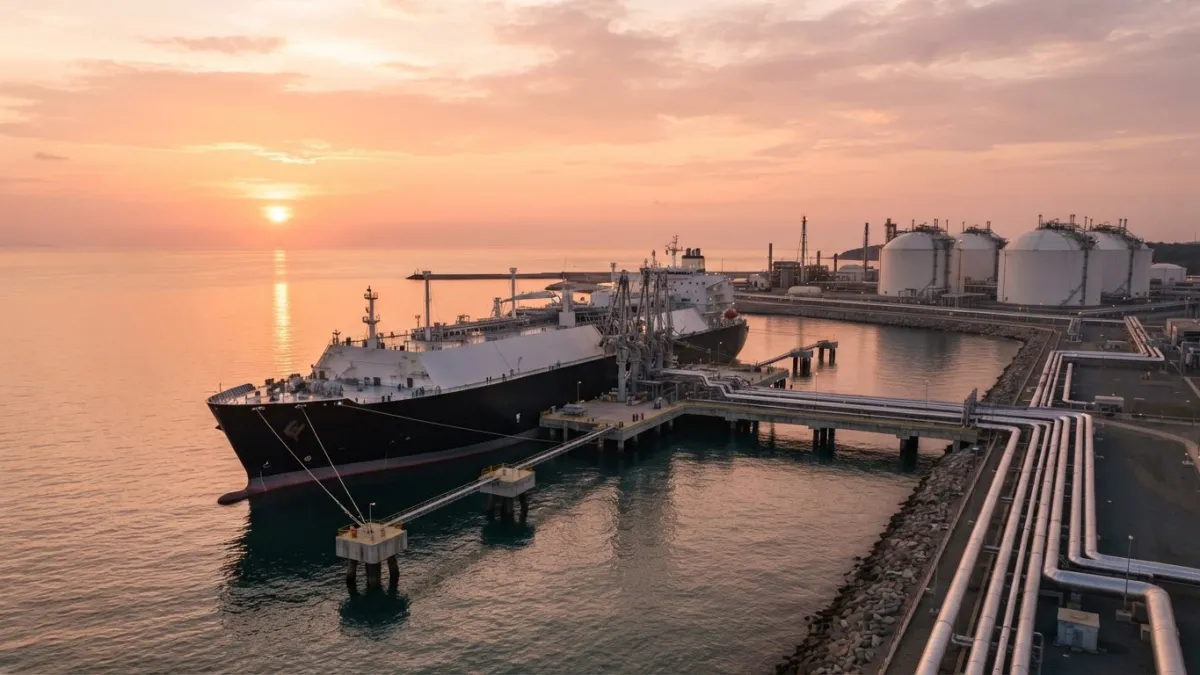
An unprecedented 1.28 billion barrels of crude oil are currently held on tankers, marking a significant increase of 180 million barrels in recent weeks, according to The Kobeissi Letter. This represents a 16% rise from the previous level of 1.10 billion barrels, highlighting a substantial delay in oil reaching refineries. This situation could impact consumers despite recent decreases in crude prices.

The disruption stems from military action that began on February 28, which initially restricted access through the Strait of Hormuz, a vital waterway carrying nearly 20% of global oil supply. While exports from the Middle East are now resuming through the strait and alternative routes, the transportation network is slower and more costly than before.
Several factors are contributing to the backlog. Importers are sourcing oil from more distant locations, extending transit times, and ship-to-ship transfers, which previously took five to seven days, now require nearly ten days, as reported by Reuters in September. These delays mean a larger volume of oil is in transit at any given time.
The increased shipping costs are substantial. Reuters reported daily rates for very large crude carriers on Middle East-to-China routes reached $1.27 million in September. ADNOC chief executive Sultan Al Jaber stated that shipping and logistics costs have surged from less than 5% to over 30% of the cost of a barrel. He also noted that approximately 1 billion barrels have been drawn from global stocks since the initial disruption.
While crude benchmarks have decreased, Brent settled at $107.03 on November 3, down from a peak of $138.21 on April 7, but still above the $61.98 it fetched on January 2. West Texas Intermediate closed at $99.64 on the same date, a decrease from $110.01 on October 19.
This situation limits the potential for further gasoline price relief. The national average gas price fell from $4.33 on October 12 to $4.15 on November 2, but the logistical challenges keep costs elevated. These costs impact not only gasoline prices but also diesel and jet fuel, as diesel is crucial for transporting goods.
Consumer sentiment remains low, with the University of Michigan’s consumer sentiment index at 48.1 in September, well below the 60 typically associated with recessionary conditions. The Consumer Price Index was up 3.7% from a year earlier in September.
Key indicators to watch include: the volume of oil on the water, ship-to-ship transfer times, and weekly EIA pump prices. A decrease in oil held at sea, a return to faster transfer times, and a rise in pump prices above $4.27 would signal continued shipping cost pressures. Tanker owners and oil producers are benefiting from the current situation, while refiners, airlines, truckers, and consumers bear the brunt of the increased freight costs.
Source
“A Record 1.28 Billion Barrels of Oil Are Stuck at Sea — and That Could Mean Higher Gas Prices”
Read the original report ↗This story was written with the help of AI from the original report credited above and published after automatic checks. No person read it before publication. Errors reported to us are corrected and listed on our corrections page. Read our editorial policy · Report an error · Corrections
Read next

UN chief calls for end to fossil fuels ‘like dinosaurs’
António Guterres, Secretary-General of the United Nations, delivered a stark warning at the COP31 climate conference in Turkey on Wednesday…
Related

Caught up in five lines
The Brief: the day’s biggest business stories, written by our desk at and .