French parliament rejects 2027 budget, sending it to the Senate
The French National Assembly overwhelmingly rejected the 2027 budget in a first-reading vote on Tuesday, with all political groups, including those supporting the government, voicing disapproval. A total of 458 deputies voted against the “revenue” section of the bill, while two members of the Communist and Overseas group abstained.
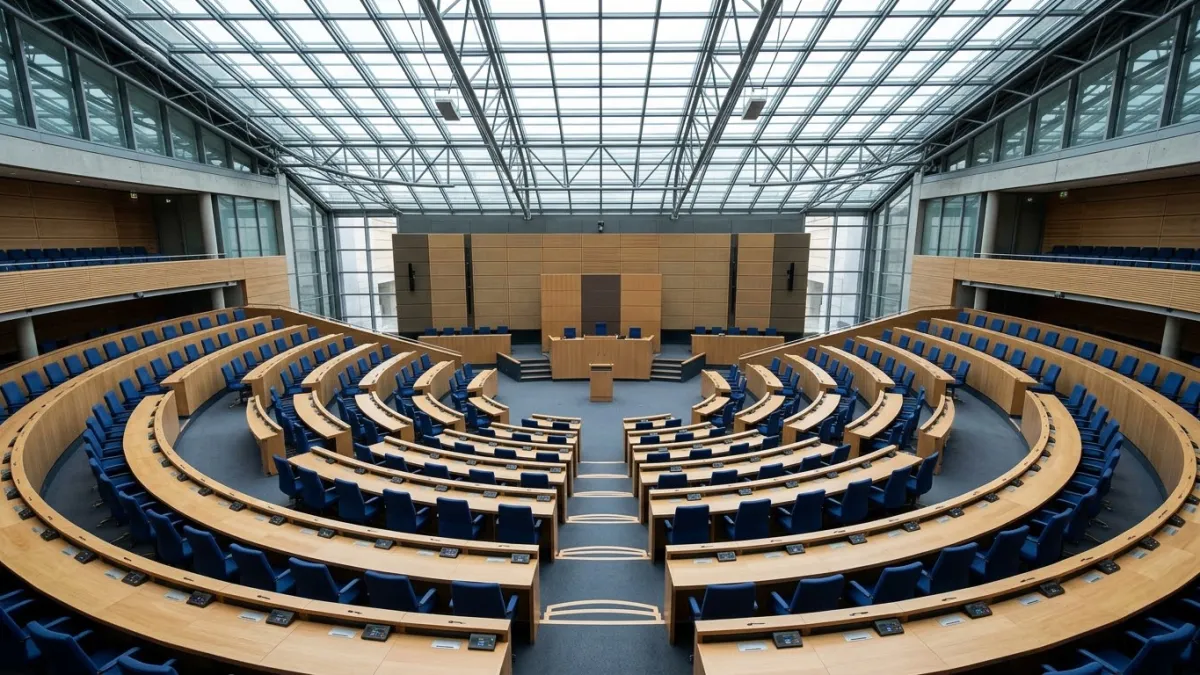
The rejection sends the budget to the Senate for review, beginning November 20th. Negotiations for a compromise are expected to take place in December, when the bill returns to the Assembly for a new reading.
Government officials indicated that compromise talks would occur “after” the initial vote. Unlike last year, when a deal was struck with the Socialist Party, no such agreement appears imminent at this stage.
The Assembly significantly altered the final budget of President Macron’s administration, which initially aimed for a 5% deficit-to-GDP ratio in 2027, compared to the projected 5.4% this year. Deputies removed measures related to tax breaks for retirees and funding for local authorities, as well as a surtax on large companies.
David Amiel, Minister of Public Accounts, estimated that the deputies’ amendments would result in a virtual deficit of “5.9%” of GDP. Paul Midy, a Renaissance Party deputy, accused the National Rally (RN) and France Unbowed (LFI) of creating tens of billions of euros in additional taxes.
Some deputies criticized the budget’s reliance on “insincere” growth projections, with left-wing members accusing the government of excluding their adopted tax measures, citing concerns about European law or international agreements. Eric Coquerel, LFI president of the Finance Committee, stated, “This budget was not credible from the start.”
Estelle Mercier (PS) described the budget as “the testament of a power that managed to enrich the wealthiest while impoverishing the state,” accusing Macronists of voting “hand in hand” with the RN against certain taxes.
The discussions took place against a backdrop of disappointing economic results, including a 0.1% decline in GDP in the third quarter, which would necessitate further austerity measures, estimated at approximately 43 billion euros, to meet the 5% deficit target.
Despite the overall rejection, deputies approved several amendments, including a Zucman tax on multinational corporations, zero-interest mortgages for young couples, and a reinforced tax on holding companies. David Amiel urged lawmakers to avoid being “hypnotized by the presidential election” and to work towards a necessary compromise.
The government may use a 49.3 procedure to pass the budget without a vote, potentially requiring the support of the RN or the PS. The RN has indicated a willingness to consider such a move. Some parliamentarians suspect the executive branch of delaying negotiations until December 18th, when an unprecedented budgetary ordinance could be used to bypass a vote. However, the government currently intends for any ordinance to reflect the initial text, which would pose challenges in addressing social unrest and implementing further austerity measures due to sluggish growth.
Source
“L'Assemblée rejette à l'unanimité un budget 2027 profondément transformé, le texte part au Sénat”
Read the original report (in French) ↗This story was written with the help of AI from the original report credited above and published after automatic checks. No person read it before publication. Errors reported to us are corrected and listed on our corrections page. Read our editorial policy · Report an error · Corrections
Read next

U.S. and China launch AI dialogue amidst competition
The United States and China must acknowledge their ongoing disagreements while collaborating to mitigate potential dangers associated with…
Related



Caught up in five lines
The Brief: the day’s biggest business stories, written by our desk at and .