Tech giants grapple with power demands as custom chips drive growth
Amazon (NASDAQ:AMZN) and Alphabet (NASDAQ:GOOGL) recently released their third-quarter results, both heavily reliant on custom-designed chips. Amazon Web Services (AWS) leveraged Trainium and Graviton processors, contributing to its fastest growth in nearly five years. Google Cloud’s revenue more than doubled, and its Tensor Processing Unit (TPU) systems are now being directly sold as a product. However, both companies face the challenge of securing sufficient power to sustain this expansion.
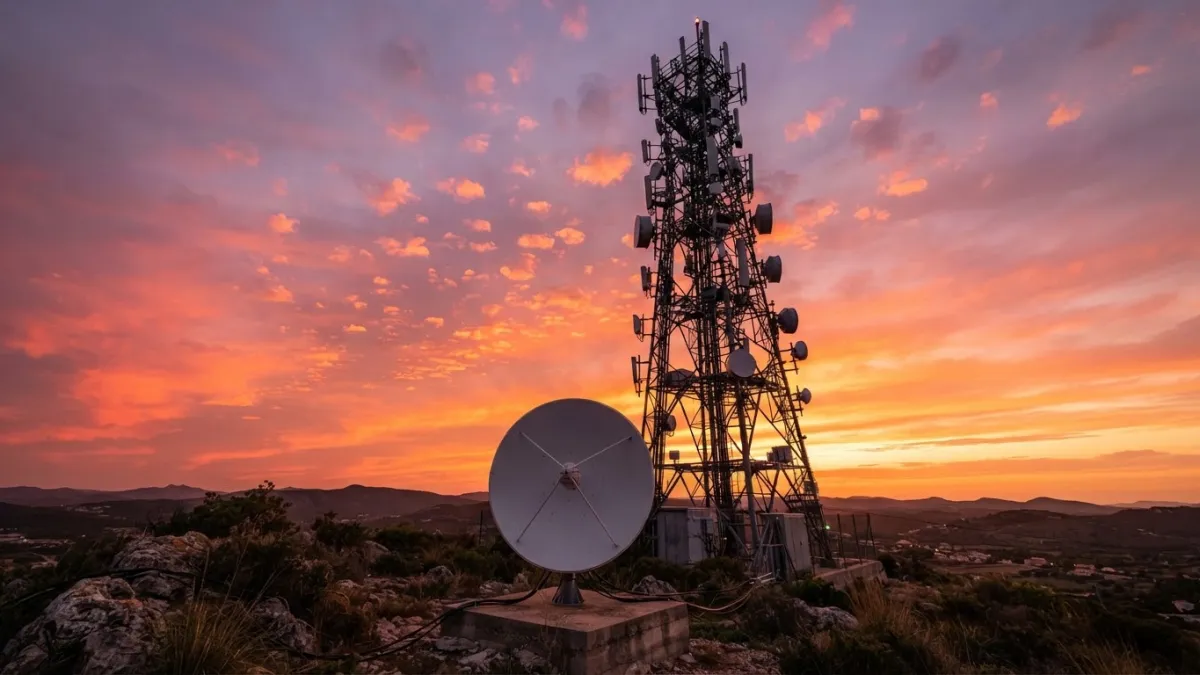
AWS reported revenue of $45.98 billion, a 39% increase with a 38.7% operating margin. Executives attribute a portion of this margin to savings from custom silicon. Customers utilizing Amazon’s chips reportedly saved over $2 billion in the third quarter alone, and commitments for Trainium revenue have increased more than 20-fold. Amazon retains these savings as AWS profit, particularly within services like Bedrock.
Google Cloud’s revenue reached $30.71 billion, up 103%, with operating income rising to $11.12 billion from $3.59 billion. This growth is linked to strong demand for TPU systems, as CEO Sundar Pichai noted, “strong demand for our TPU systems across a wide range of customers.”
Amazon primarily keeps its chip technology in-house, while Google is exploring external chip sales, potentially starting in late 2027.
To manage increasing power needs, Amazon secures capacity commitments from large customers, sometimes reserving up to a gigawatt of capacity. CEO Andy Jassy indicated that new cloud capacity currently operates at a margin 3,500 basis points lower than long-leased data centers. Owning or leasing data center sites provides greater control over power connections. Amazon has also committed $1 billion to U.S. data center communities, acknowledging energy prices as a potential risk.
Alphabet’s rapid growth is impacting its financial health. Free cash flow fell to negative $9.06 billion, prompting the company to raise $28.7 billion through notes and equity sales. Google utilizes demand-response arrangements to reduce data center load during peak periods, but is also incurring debt and diluting shares to fund its expansion.
Analysts will be watching Amazon’s projected $220 billion in 2026 capital expenditures to see if payback periods continue to shorten as promised. For Google, the ability of TPU sales to offset rising interest costs will be a key indicator. Alphabet’s GAAP EPS of $2.12 fell short of the $2.97 estimate, partly due to a $0.55 loss from equity securities.
Over the past week, Amazon’s stock rose 7.88%, while Alphabet’s fell 18.75%. Amazon’s strategy of retaining chip savings within AWS and controlling its data center infrastructure currently provides a competitive advantage. Google’s growth trajectory could be threatened if its free cash flow doesn’t improve while Cloud continues its rapid expansion.
Source
“How Will Amazon and Alphabet Handle Custom Silicon Efficiency and Grid Access Now?”
Read the original report ↗This story was written with the help of AI from the original report credited above and published after automatic checks. No person read it before publication. Errors reported to us are corrected and listed on our corrections page. Read our editorial policy · Report an error · Corrections
Read next
Anthropic IPO: pricing details withdrawn, valuation remains uncertain
The planned initial public offering (IPO) of Anthropic, a direct competitor to OpenAI and its ChatGPT, has taken an unexpected turn. According to a…
Related


Caught up in five lines
The Brief: the day’s biggest business stories, written by our desk at and .